Cribbage
About Cribbage
Cribbage is a classic card game with centuries of history, combining luck and strategy. It is played by millions worldwide and is well known for its unique scoring system using a traditional cribbage board.
On CardGamesHub.io, you can play cribbage online for free, either with friends in multiplayer mode or alone to practice your skills. Whether you are new and want to learn cribbage rules or a seasoned player enjoying a cribbage classic, our platform offers a smooth and fun experience.
Cribbage Rules: How to Play Cribbage
Objective
Cribbage is played to score points by forming certain card combinations and strategically playing cards during the game phases.
The first player to reach or exceed 121 points wins the game.
Setup
- Use a standard 52-card deck and a cribbage board for scoring.
- To pick the dealer, each player draws a card; the player with the lower card becomes the dealer. Redraw if there is a tie.
- Shuffle and deal 6 cards to each player.
- Each player chooses 2 cards to place face-down into the crib. The crib belongs to the dealer and is counted later for extra points.
- Draw and reveal the top card of the deck; this is the starter card.
- If it is a Jack, the dealer scores 2 points (his heels).
Gameplay Phases
Cribbage has two main phases:
- Play Phase
- Counting the Hands Phase
Play Phase
The non-dealer starts by playing a card and announcing its value:
- Ace = 1
- Number cards = face value
- J/Q/K = 10
Players alternate playing cards, adding to a running total without going over 31.
- If a player cannot play without exceeding 31, they say Go. The opponent scores 1 point.
- If a player plays a card to reach exactly 31, they score 2 points.
- After reaching 31 or when no more cards can be played, reset the count to 0, and continue with remaining cards.
Scoring during Play Phase:
| Combination | Points |
|---|---|
| Making the running total exactly 15 | 2 |
| Pair (two cards of same rank) | 2 |
| Triple (three cards of same rank) | 6 |
| Four-of-a-kind (four cards of same rank) | 12 |
| Run of 3 or more consecutive ranks | 1 per card |
Runs do not need to be in the original order - for example, playing 3, then 5, then 4 still makes a run of 3.
Counting the Hands
After the Play Phase, players score their hands and the crib:
- Each player counts 4 cards from their hand plus the starter card.
- The dealer also counts the crib (4 crib cards plus starter card).
Scoring during Counting Phase:
| Combination | Points |
|---|---|
| Each unique combination summing to 15 | 2 per combination |
| Pair | 2 |
| Triple | 6 |
| Four-of-a-kind | 12 |
| Runs of 3+ cards | 1 per card |
| Flush (4 hand cards same suit) | 4 |
| Flush (4 hand cards + starter card same suit) | 5 |
| His nobs (Jack in hand same suit as starter) | 1 |
The non-dealer counts first; if they pass 121 before the dealer counts, they win immediately.
Crib Scoring
The dealer then scores the crib as if it is a hand, using the same rules.
Note: Flush in crib only scores if all 4 crib cards plus starter card are the same suit (must be a 5-card flush).
Scoring on the Board
- Players use two pegs each to track points.
- Always move the back peg ahead of the front peg by the number of points scored.
- This shows both your current score and your previous score.
Useful Links for Learning How to Play Cribbage
If you prefer reading, here are some detailed guides that cover cribbage rules:
- Beginner's Guide to Cribbage
- Six Card Cribbage
- The Rules of Cribbage
- Learn to Play Cribbage
- How to Play Cribbage for Beginners
Or, if you prefer to learn by watching:
Check out this YouTube playlist covering cribbage rules.
Cribbage Tips and Strategies
Whether you are new to cribbage or a seasoned player looking to improve, mastering key strategies can elevate your play. These tips will help sharpen your decision making.
1. Think About the Starter Card
Before pegging begins, check the starter card carefully and evaluate what it enables.
- Does it help me make fifteens?
- Can it complete a run or pair?
- Could it improve my crib if I am dealer?
2. Build Combinations in Your Hand
While fifteens are important, do not overlook other scoring patterns.
- Pairs, trips, and quads score well.
- Runs of three or more can add many points.
- Flushes are easy to miss but can be valuable.
3. Pay Attention to Your Opponent
Watch which cards your opponent plays and discards to infer likely hand structure.
- Avoid throwing cards they might use to make fifteens.
- Notice if they hold onto high or low cards.
- Try to estimate what remains in their hand to avoid helping them peg.
4. Track the Score Constantly
Do not wait until the end of a hand to evaluate the board position.
- Keep checking score during pegging.
- Know when you are close to going out at 121.
- Adjust risk level depending on whether you are behind or ahead.
5. Practice, Experiment, Learn
Consistent practice is the fastest way to improve.
- Play many online cribbage games on this platform.
- Compare defensive discard choices versus offensive pegging lines.
- Review each hand and ask what a stronger keep might have been.
Useful Links
If you prefer reading, here are some detailed guides that cover cribbage tips and strategies:
Or, if you prefer to learn by watching:
Check out this YouTube playlist covering cribbage tips and strategies.
History of Cribbage
Cribbage is a classic card game with roots going back nearly four centuries. Most historians agree it was created in the early 1600s by the English poet and gambler Sir John Suckling. He was inspired by an older game called Noddy and introduced the idea of the crib, a separate hand made from each player's discarded cards.

Though Suckling's card skills were legendary, his reputation was even more colorful: according to legend, he distributed marked decks to England's upper class, then traveled around challenging them to games of cribbage and winning considerable sums.
As the centuries passed, cribbage's popularity spread beyond English parlors. By the 19th century it appeared in Charles Dickens' novel The Old Curiosity Shop, and sailors and fishermen carried the game around the world.
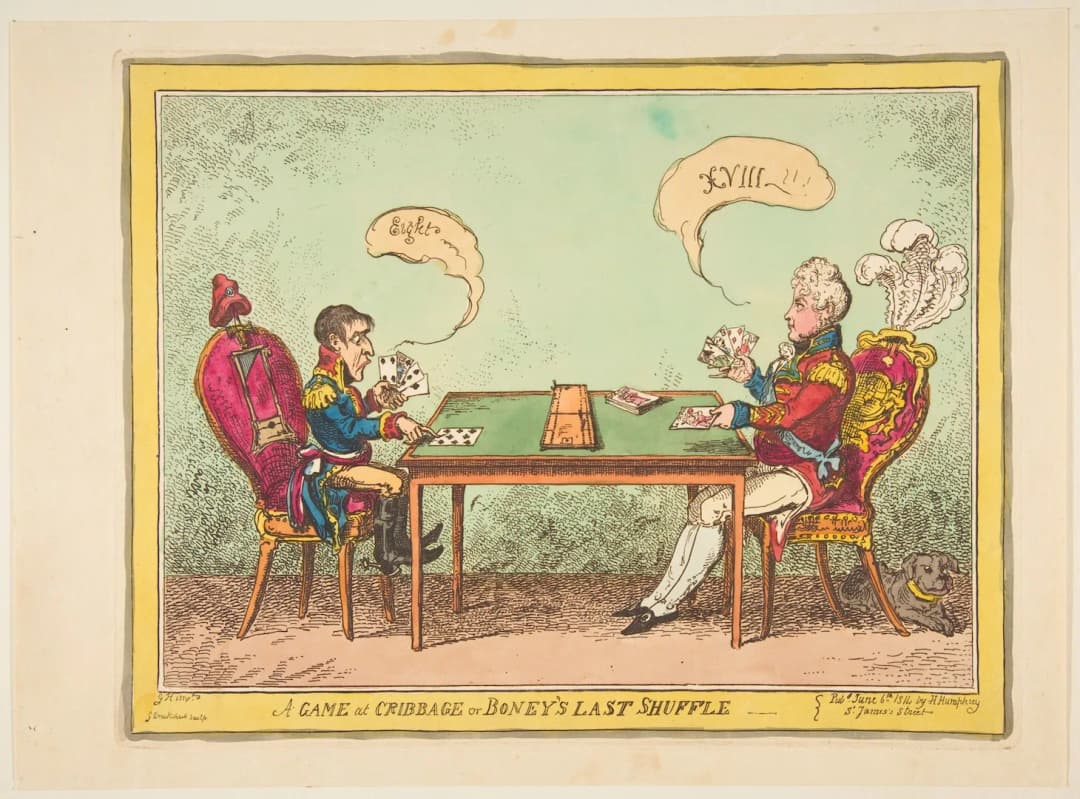
In the United States, cribbage has been played since colonial times. It became especially famous during World War II after the legendary Perfect 29 hand dealt aboard USS Wahoo in 1943.
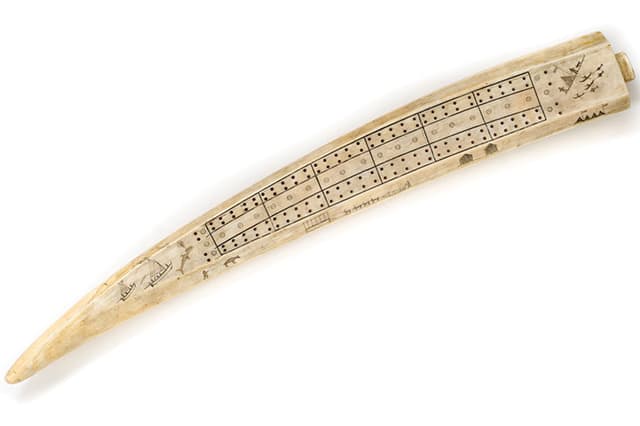
Today, cribbage remains a timeless mix of luck, memory, and strategy. Its distinctive board is still seen in homes and pubs, while many players now enjoy cribbage online.
Useful Links
If you prefer reading, here are some detailed guides that cover the history of cribbage:
Or, if you prefer to learn by watching:
Check out this YouTube playlist covering cribbage history.
Frequently Asked Questions
Do you have questions about the cribbage game? Whether you play online or in person, these answers cover common topics.
Credits & Acknowledgments
We would like to thank everyone who helped us build this cribbage experience and the supporting editorial content.
Game Assets
Playing Cards: Special thanks to Adrian Kennard for releasing his beautifully crafted playing card SVG designs. These cards helped bring our cribbage game to life.
Cribbage Board: Background wood texture provided by ambientCG. This texture helps recreate the feel of a traditional cribbage board.
Content
Sir John Suckling: Portrait of Sir John Suckling sourced from the National Portrait Gallery, London.
A Game of Cribbage or Boney's Last Shuffle: This 1814 painting by George Cruikshank is sourced from The Metropolitan Museum of Art.
Curved cribbage board made from a walrus tusk: From the Hudson's Bay Company Museum Collection, sourced from Canada's History.