Solitaire
About Solitaire
Solitaire is a classic single-player card game, also known as Klondike, where the goal is to build four foundation piles from Ace to King, one per suit. Cards are dealt across seven tableau columns and you work to uncover them in the right sequence before the deck runs out.
On CardGamesHub.io, Solitaire is free to play and runs in your browser. It sits alongside Cribbage and other classics on the platform, a clean and satisfying game for a quick break or a longer session.
Looking for more? Cribbage and Sudoku are also available on CardGamesHub.io, each offering a different kind of challenge.
Solitaire Rules: How to Play
Objective
The goal of Solitaire is to move all 52 cards to four foundation piles, one per suit, built in ascending order from Ace to King.
Setup
- 1 standard 52-card deck, no jokers
- 7 tableau columns: column 1 has 1 card, column 2 has 2, up to column 7 which has 7 cards
- Only the top card of each tableau column starts face-up; all others are face-down
- The remaining 24 cards form the stock pile, placed face-down
- 4 empty foundation slots, one per suit
- 1 empty waste pile, placed next to the stock
The Layout
The board has four distinct areas. Understanding each one before you play helps you see all your options clearly.
- Tableau: The seven columns in the lower half of the board. Most card movement happens here.
- Foundations: Four slots in the upper right, one per suit. Your goal is to fill them from Ace to King.
- Stock: The face-down draw pile in the upper left. Click it to turn a card over to the waste.
- Waste: Cards turned over from the stock. Only the top card is available to play.
Moving Cards
Every move in Solitaire follows strict placement rules. Tableau columns build downward in alternating colour; foundations build upward by suit.
| Move | Rule |
|---|---|
| Tableau to Tableau | Descending rank, alternating colour (red on black, black on red) |
| Stack to Tableau | A face-up sequence moves as a unit if the bottom card follows the tableau rule |
| Tableau to Foundation | Same suit, ascending from Ace to King |
| Waste to Tableau or Foundation | Standard tableau or foundation rules apply |
| Empty Tableau Column | Only a King, or a sequence led by a King, can fill an empty column |
How to Play Step by Step
- Deal the tableau: seven columns, with only the top card of each column face-up.
- Move any Ace directly to a foundation slot.
- Look for face-up tableau cards that can stack onto another column using the alternating-colour, descending-rank rule.
- When a face-down card becomes the top card of a column, flip it face-up.
- Draw from the stock when no useful tableau moves are available.
- Play the top waste card to a tableau column or foundation if it fits the rules.
- When the stock is empty, flip the waste pile face-down to restart the stock.
- Repeat until all four foundations reach King, or no legal moves remain.
Draw 1 vs Draw 3
Solitaire is commonly played in two drawing styles. The version on CardGamesHub.io uses Draw 1.
| Feature | Draw 1 | Draw 3 |
|---|---|---|
| Cards turned from stock | 1 at a time | 3 at a time; only the top card is playable |
| Difficulty | Easier | Harder |
| Waste recycles | Unlimited | Unlimited |
| Available on CardGamesHub | Yes | No |
Winning and Losing
You win when all 52 cards are placed on the four foundations, each built by suit from Ace to King.
The game is lost when no legal moves remain and both the stock and waste are empty.
Common Edge Cases
- Empty column: Only a King or a face-up sequence led by a King can fill it. No other rank can start a new column.
- Stock exhausted: Flip the entire waste pile face-down to form a new stock. There is no limit on recycles.
- No legal moves: The game is over. Standard rules do not allow a forced draw or undo once all options are exhausted.
Useful Links
If you prefer reading, these guides cover Solitaire rules in detail:
- How to Play Solitaire
- Solitaire on Britannica
- Klondike (Solitaire) on Wikipedia
- How to Play Solitaire on WikiHow
Or, if you prefer to learn by watching:
Check out this YouTube guide covering Solitaire rules.
Solitaire Tips and Strategies
Winning at Solitaire takes more than luck. Whether you are just starting out or looking to sharpen your game, these strategies will help you uncover more cards, use your moves wisely, and reach the foundations more often.
Beginner Tips
Reveal Hidden Cards First
Face-down cards are your biggest unknown. Every move that flips a new card open increases your options.
- Prioritize tableau moves that expose a face-down card over moves that do not
- Focus on columns with the most hidden cards first
- Avoid moving cards away from columns that still have face-down cards underneath
Move Aces and Twos to the Foundation Immediately
Aces and Twos are never useful in the tableau. Send them to the foundation as soon as they appear.
- An Ace in the tableau blocks a foundation slot and wastes space
- A Two on the foundation is safe because it cannot be used to build a tableau sequence
- Check for Aces and Twos after every draw from the stock
Never Empty a Column Without a King Ready
An empty tableau column can only be filled by a King or a King-led sequence. Clearing a column without one wastes a valuable slot.
- Check your tableau and waste pile for an available King before you clear a column
- A King with a long sequence attached is more valuable than a lone King
- If no King is in sight, avoid emptying columns
Intermediate Strategies
Balance Your Foundation Piles
Keeping all four foundation piles within one or two ranks of each other prevents you from locking useful cards in the tableau.
- A card on the foundation cannot be moved back to the tableau in standard rules
- If one suit races far ahead, mid-rank cards of other suits get stranded
- Hold back a card from the foundation if it is still needed in the tableau to build sequences
Treat the Stockpile as a Last Resort
Drawing from the stock before exploring all tableau moves wastes potential and cycles the deck faster.
- Scan every column for valid tableau-to-tableau moves before clicking the stock
- Drawing early can bury a card you need under new stock cards
- Track how many cycles through the stock remain; in Draw 1, cycles are unlimited but time is finite
Think Two or Three Moves Ahead
Each card you move opens or closes future options. Before committing, trace what the next move will look like.
- Ask whether moving a card will free a useful face-down card or just shuffle face-up cards around
- Avoid moves that feel productive but only rearrange cards without uncovering new ones
- If two moves are equally valid, pick the one that creates more follow-on options
Advanced Tactics
Time When You Send Cards to the Foundation
Mid-rank cards (5 through 9) are most useful for building tableau sequences. Sending them to the foundation too early removes critical stepping stones.
- Keep a 7 in the tableau if it enables a 6-5 sequence to form; send it later once the path is clear
- Aces and Twos are always safe to send; everything else deserves a second look
- If a card has no tableau role left, move it to the foundation
Use Empty Columns as Temporary Storage
An empty column is not just for Kings. Use it as a staging area to reorganize sequences and unlock hidden cards.
- Temporarily park a blocking sequence in the empty column while you rearrange beneath it
- Fill it with a King and its sequence as soon as one becomes available to reclaim the slot
- Never use an empty column to store a single low-rank card with no follow-on plan
Count Your Stock Cycles
Knowing how many times you have cycled through the stock helps you judge whether a winning path still exists.
- In Draw 1, unlimited recycles mean the game is rarely blocked by the stock alone
- If the same unhelpful cards keep appearing, look for a tableau move you may have missed
- When the stock yields nothing new across multiple cycles, the game is likely stuck
Common Mistakes to Avoid
Most lost games trace back to a handful of repeated errors. Recognizing them is the fastest way to improve.
| Mistake | Why It Hurts | What to Do Instead |
|---|---|---|
| Rushing cards to the foundation | Removes mid-rank cards needed for tableau sequences | Wait until a card has no more tableau role before sending it up |
| Drawing from the stock too early | Buries useful cards and wastes deck cycles | Always check every column for tableau moves first |
| Clearing a column without a King | Wastes the only slot that can hold any card | Confirm a King is available before emptying a column |
| Ignoring face-down cards | Leaves your most important unknowns hidden for too long | Prioritize moves that flip face-down cards with every turn |
| Building foundation piles unevenly | Traps cards of lagging suits in the tableau | Keep all four piles within one or two ranks of each other |
Quick Do's and Don'ts
Do
- Prioritize moves that flip hidden cards
- Move Aces and Twos to the foundation right away
- Keep all four foundation piles balanced
- Use empty columns as temporary staging areas
- Think ahead before committing to a move
Don't
- Draw from the stock before checking the tableau
- Clear a column without a King ready to fill it
- Rush mid-rank cards to the foundation
- Make moves that only rearrange face-up cards
- Ignore how many stock cycles have passed
More on CardGamesHub
New to the game? Read the Solitaire rules for a full breakdown of setup, card movement, and Draw 1 vs Draw 3.
Looking for another challenge? Try Cribbage or Sudoku for a different kind of puzzle.
Useful Links
For more strategy reading, these guides are worth your time:
- Solitaire Strategy and Tips on Solitaire.com
- Top 10 Strategies to Win at Solitaire on MobilityWare
- 11 Strategies to Win Klondike Solitaire on TheSolitaire.com
- Klondike Solitaire Strategy on Arkadium
Prefer to learn by watching:
This YouTube playlist on Solitaire strategy covers the essentials in a visual format.
History of Solitaire
Solitaire is one of the most-played card games in the world, yet its origins are older and more varied than most players realize. From 18th-century European parlors to the Klondike gold fields and the first Windows PC, the game has traveled a remarkable path to reach your screen.
Origins in Northern Europe
The earliest written record of a solitaire-style card game appears in a 1783 German game anthology titled Das Neue Konigliche L'Hombre-Spiel. The game most likely developed independently across France, Germany, and Scandinavia during the late 1700s, as card-playing culture was expanding rapidly across Europe at the time. The word 'solitaire' comes from the French meaning alone or solitary, reflecting the game's defining feature: it is played without opponents.
The Patience Era
By the early 1800s, rule books for card patience games were being published in Russia and Sweden. In England, the game was called Patience, a name that persists in British English to this day. One of the earliest English-language collections, Patience Games by Lady Adelaide Cadogan, appeared around 1870 and documented dozens of variants. The word patience captured both the solitary nature of the game and the calm temperament it was thought to require.
Napoleon and the Patience Myth
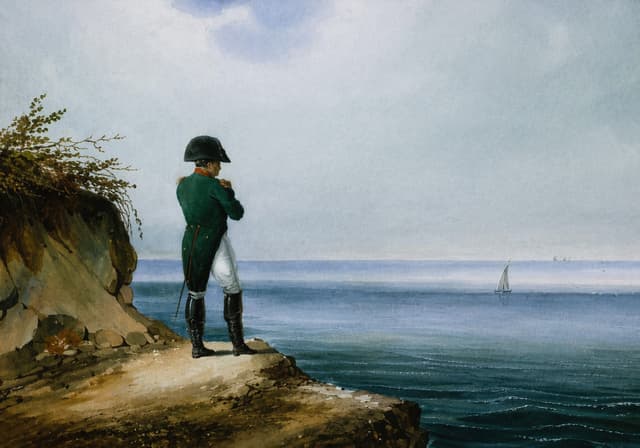
A well-known legend holds that Napoleon Bonaparte passed the time playing Patience during his exile on Saint Helena after 1815. Historians who have examined primary sources closely attribute the card-playing to Emmanuel de Las Cases, who accompanied Napoleon into exile, rather than to Napoleon himself. Despite the misattribution, the Napoleon connection became so firmly embedded in popular culture that several solitaire variants still bear his name. The myth says something true about the game: it is a natural companion for long, solitary days.
Klondike and the Gold Rush Era
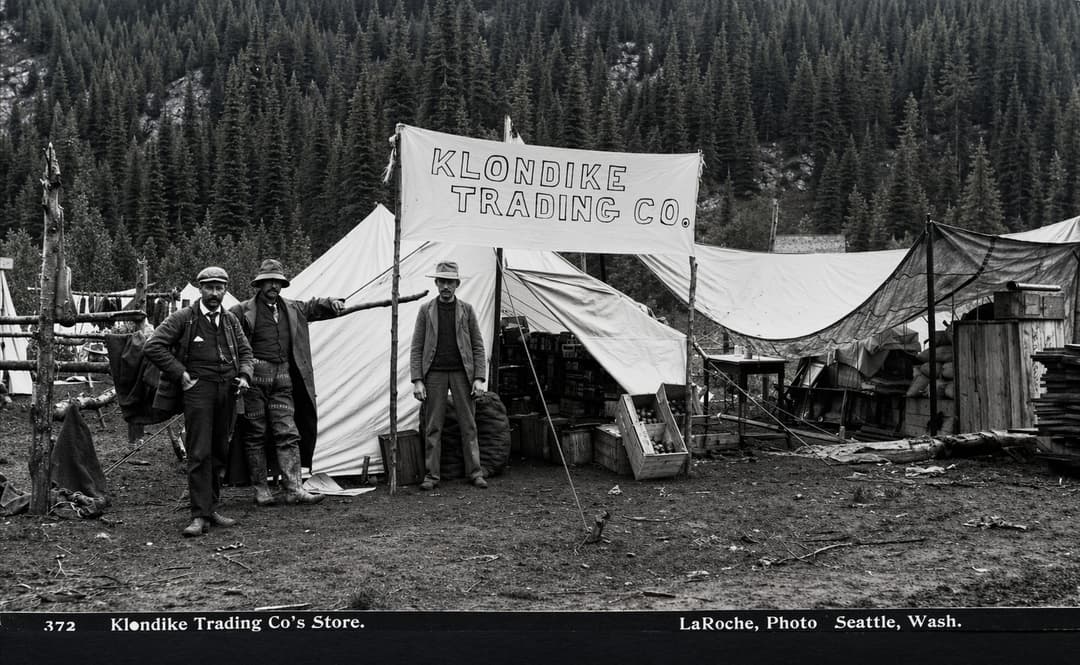
Gold was discovered near the Klondike River in the Yukon Territory of Canada in 1896, setting off one of the largest gold rushes in history. Tens of thousands of prospectors flooded into the region over the following two years, spending long stretches of time in camps with little to do during harsh winters. Card games traveled with them, and the Klondike variant of patience became a staple pastime of the camps. By the early 20th century, Klondike had become so dominant in North America that the word 'Solitaire' alone was taken to mean Klondike, a convention that holds to this day.
Microsoft Solitaire and the Digital Era
In the summer of 1988, Wes Cherry, a college student working as an intern at Microsoft, built a digital version of Klondike Solitaire for Windows. The card artwork was created by Susan Kare, who had previously designed the iconic interface elements of the original Macintosh. When Windows 3.0 shipped in May 1990, Solitaire shipped with it. Microsoft included the game with a deliberate purpose: to help new PC users practice mouse skills, specifically the drag-and-drop interaction that Windows depended on. The game served its purpose far beyond expectations. Wes Cherry never received royalties for the game despite it being played on billions of machines worldwide.
Hall of Fame and Modern Legacy
In 2019, Microsoft Solitaire was inducted into the World Video Game Hall of Fame at the Strong National Museum of Play in Rochester, New York, joining games such as Tetris, Super Mario Bros., and Minecraft. The induction recognized Solitaire as one of the most-played computer games ever made and acknowledged its role in shaping how hundreds of millions of people first learned to use a personal computer. Today, solitaire is played across every major platform and in dozens of regional variants, but the Klondike version remains the default when no other is specified.
Key Milestones in Solitaire History
| Year | Milestone |
|---|---|
| 1783 | First known written reference to a solitaire-style game, in a German game anthology. |
| Early 1800s | Patience games codified in Russia and Sweden; the term 'Patience' enters English use. |
| c. 1870 | Lady Adelaide Cadogan publishes one of the first English-language patience rule books. |
| 1896-1898 | Klondike Gold Rush in the Yukon; the Klondike variant spreads among prospectors. |
| 1988 | Wes Cherry builds Windows Solitaire as a Microsoft intern; card art by Susan Kare. |
| 1990 | Microsoft Solitaire ships with Windows 3.0, reaching millions of new PC users. |
| 2019 | Microsoft Solitaire inducted into the World Video Game Hall of Fame. |
Useful Links
For deeper reading on the history of solitaire and patience games:
- History of Solitaire on Wikipedia
- Klondike Solitaire on Wikipedia
- Microsoft Solitaire on Wikipedia
- The History of Patience Games by David Parlett
- A Brief History of Solitaire on The Week
Prefer a visual overview:
This YouTube search on the history of Solitaire surfaces several short documentary-style videos covering the origins and Microsoft era.
Solitaire FAQ
Common questions about Klondike Solitaire answered.
Credits & Acknowledgements
This Solitaire page brings together the playable game experience on CardGamesHub.io with editorial content covering rules, strategy, and history. We would like to acknowledge everyone whose work contributed to making this page possible.
Game Assets
Playing Cards: The card face designs used in this game are sourced from Adrian Kennard's playing card SVG collection. These carefully crafted SVG designs bring a clean, classic look to every deal.
Historical Images
Napoleon at Saint Helena: The illustration of Napoleon at Saint Helena is sourced from Far and Wild Travel. It is used here for historical illustration purposes in the History section.
Klondike Prospectors: The photograph of Klondike prospectors during the 1898 gold rush is sourced from Irish Independent. It is used here to illustrate the gold rush origins of Klondike Solitaire.
Platform and Engineering
This Solitaire experience is built and maintained by the CardGamesHub.io team. Thanks to everyone who contributed to the platform, the game experience, and the editorial content that supports it.
Explore More on CardGamesHub
Looking for more to play? Cribbage and Sudoku are also available on CardGamesHub.io.